The Importance of Drip Irrigation for Fruit Trees
In the world of agriculture, efficient water management is crucial, especially for fruit trees that require consistent moisture to thrive. Drip irrigation, a method that delivers water directly to the plant's root zone through a network of tubes and emitters, has emerged as a game-changer for fruit growers. Unlike traditional overhead sprinkling or flood irrigation, drip systems provide precise, slow-release watering that minimizes waste and maximizes plant health. This article explores the key reasons why drip irrigation is essential for fruit trees, drawing on its benefits for water conservation, nutrient delivery, disease control, and overall productivity.
Water Efficiency and Conservation
One of the primary advantages of drip irrigation is its unparalleled water efficiency. Fruit trees, such as apples, citrus, and peaches, have deep root systems that benefit from targeted watering rather than broad application. Drip systems can reduce water usage by up to 50% compared to conventional methods by delivering moisture exactly where it's needed—directly to the roots—without evaporation or runoff.This is particularly important in regions facing water scarcity, where over-irrigation can lead to issues like slowed root growth and nutrient deficiencies in alkaline soils. For instance, young fruit trees, which require more frequent watering, perform better under drip irrigation because it allows for controlled, regular hydration without saturating the surrounding soil. By promoting deep root development, drip irrigation helps trees become more drought-resistant over time, ensuring long-term sustainability.
Enhanced Nutrient Management
Drip irrigation isn't just about water; it's also an effective tool for fertigation—the process of injecting fertilizers directly into the irrigation system. This allows nutrients to be delivered precisely to the root zone, reducing leaching and ensuring that fruit trees absorb what they need for optimal growth. Traditional irrigation methods often wash away fertilizers, leading to environmental pollution and higher costs for growers. With drip systems, fruit trees receive a steady supply of essential elements like nitrogen, phosphorus, and potassium, which directly contributes to healthier foliage, stronger branches, and better fruit set. This targeted approach is especially beneficial for orchards, where uniform nutrient distribution can prevent deficiencies that affect yield and quality. Disease Prevention and Plant Health Overhead irrigation can inadvertently promote fungal diseases by wetting leaves, stems, and fruits, creating a moist environment for pathogens to thrive. Drip irrigation mitigates this risk by keeping foliage dry and focusing water at the soil level. For fruit trees, this means lower incidences of common issues like powdery mildew, blight, or rot, which can devastate crops. Additionally, by maintaining dry rows between trees, drip systems improve access for maintenance tasks like pruning and harvesting, reducing the spread of soil-borne diseases. Subsurface drip irrigation takes this a step further by burying emitters underground, further minimizing surface moisture and weed growth around the trees.
Improved Yield and Fruit Quality
The precision of drip irrigation translates directly to better fruit production. Studies and practical applications show that fruit trees irrigated this way produce higher yields with superior quality—larger, juicier fruits with better flavor and nutritional value.This is because consistent moisture levels prevent stress during critical growth stages, such as flowering and fruit development. For example, in citrus orchards, drip systems help avoid fruit cracking or dropping due to irregular watering. Overall, growers report healthier trees that are more resilient to environmental stresses, leading to increased profitability.
Environmental and Economic Benefits
Beyond the trees themselves, drip irrigation supports broader environmental goals. It reduces soil erosion by avoiding surface runoff and minimizes the need for chemical inputs through better pest and weed control.This eco-friendly approach aligns with sustainable farming practices, conserving resources and protecting groundwater from contamination. Economically, while the initial setup cost may be higher, drip systems pay off through lower water bills, reduced labor for irrigation management, and decreased maintenance overhead.In large-scale orchards, the long-term savings and improved efficiency make it a worthwhile investment. Conclusion
Drip irrigation represents a vital advancement in fruit tree cultivation, offering a host of benefits that enhance productivity while promoting sustainability. By conserving water, optimizing nutrient use, preventing diseases, and boosting yields, it empowers growers to achieve more with less. As climate change intensifies water challenges, adopting drip systems isn't just advantageous—it's essential for the future of fruit farming. Whether you're a backyard enthusiast or a commercial orchard manager, integrating drip irrigation can transform your trees' health and your operation's success.
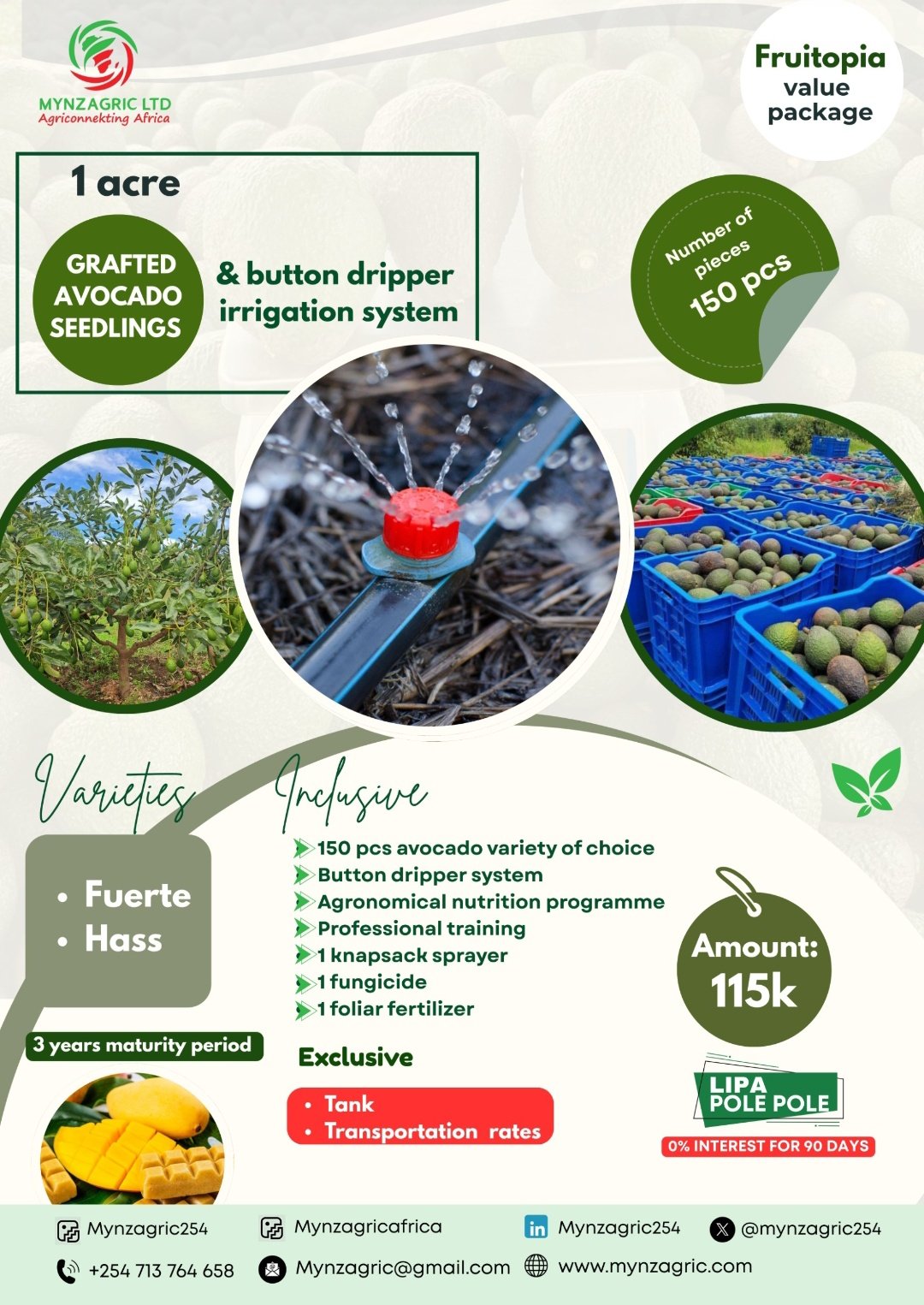
To get Grafted fruit seedlings and fruitopia drip irrigation and fruit seedlings package, contact +254713764658